Buy leonida-laconico.eu ?
We are moving the project
leonida-laconico.eu .
Are you interested in purchasing the domain
leonida-laconico.eu ?
domain@kv-gmbh.de · 0541-91531010
Buy leonida-laconico.eu ?
Who was that in the 16th century?
In the 16th century, one of the most prominent figures was Queen Elizabeth I of England. She ruled from 1558 until her death in 1603 and is often referred to as the "Virgin Queen" or "Good Queen Bess." Elizabeth I was known for her strong leadership, successful foreign policy, and the flourishing of the arts during her reign, often considered a golden age in English history. Her reign saw the defeat of the Spanish Armada in 1588, solidifying England's status as a major naval power. **
What is Christianity in the 16th century?
In the 16th century, Christianity was undergoing significant changes and divisions. The Protestant Reformation, led by figures such as Martin Luther and John Calvin, challenged the authority of the Catholic Church and led to the formation of new Christian denominations. This period saw intense religious and political conflicts, including the Thirty Years' War and the English Reformation. Christianity in the 16th century was characterized by a growing emphasis on individual interpretation of scripture, the rise of new forms of worship and religious practice, and the fragmentation of the Church into different branches and traditions. **
Similar search terms for 16th century
Top-Angebote
Products related to 16th century:
-
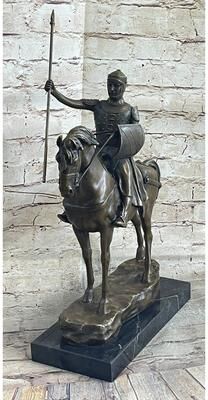
Bronzhaus Bronze Sculpture Brave Medieval Knight Warrior Art Deco Original Marble FigurineCondition: This sculpture is in perfect condition. Bronze Dimensions with Marble Base: Height 23 inches x Width 12 inches Marble Dimensions: 11 inches X 5 inches.465,49 $*Shipping: 0,00 $Secure redirect to the provider
-
No Mid-Century DeskA perfectly-sized desk, a detachable 360° adjustable overhead lamp, and all the tech accessibility you'd want (a power outlet, as well as USB and USB-C charging ports) packed into one product you'll love. This is the modern desk you've always wanted.254,49 $*Shipping: 0,00 $Secure redirect to the provider



-
What professions existed in the 16th century?
In the 16th century, there were a wide variety of professions, including artisans, merchants, farmers, soldiers, sailors, clergy, doctors, lawyers, and scholars. Artisans were skilled craftsmen who created goods such as textiles, pottery, and metalwork. Merchants engaged in trade and commerce, often traveling long distances to sell their goods. Farmers worked the land to produce food and other agricultural products. Soldiers and sailors served in military and naval forces. Clergy members were religious leaders who served in churches and monasteries. Doctors and lawyers provided medical and legal services to their communities. Scholars pursued knowledge and education in fields such as philosophy, theology, and the arts. **
-
What were the formulations in the 16th century?
In the 16th century, formulations referred to the process of creating medicinal remedies and treatments using natural ingredients such as herbs, minerals, and animal products. These formulations were often based on traditional knowledge and passed down through generations. They were used to treat a wide range of ailments and were often prepared by apothecaries or herbalists. The formulations in the 16th century were often based on the principles of humoral theory, which believed that the body's health was determined by the balance of four bodily fluids. **
-
What is the name of the 16th century?
The 16th century is commonly referred to as the "Renaissance" period. This era was marked by significant cultural, artistic, and intellectual developments, as well as major advancements in science and exploration. It was a time of great change and innovation, with the rise of humanism and the spread of new ideas and knowledge across Europe. The 16th century also saw the Protestant Reformation and the beginning of the Age of Discovery, making it a pivotal period in world history. **
-
Were there still knights in the 16th century?
Yes, there were still knights in the 16th century, although their role and significance had evolved from the medieval period. Knights continued to exist as a social class and were often associated with chivalry and military service. However, their role as heavily armored cavalry had diminished with the rise of gunpowder weapons and changes in warfare tactics. Knights in the 16th century were more likely to be involved in courtly life, diplomacy, and administrative duties, rather than solely focusing on combat. **


What inventions and discoveries were made in the 16th century?
The 16th century was a period of significant innovation and discovery. Some of the notable inventions and discoveries made during this time include the printing press by Johannes Gutenberg, which revolutionized the spread of information; the telescope by Hans Lippershey, which led to advancements in astronomy; and the discovery of the New World by Christopher Columbus, which opened up new trade routes and expanded European influence. Additionally, advancements in navigation, cartography, and medicine were also made during this period. **
What were the roles of Italian cities in the 16th century?
In the 16th century, Italian cities played crucial roles in the cultural, political, and economic landscape of Europe. Cities like Florence, Venice, and Rome were centers of artistic and intellectual innovation, with the Renaissance flourishing in these urban centers. Politically, cities were often independent city-states, with powerful families like the Medici in Florence and the Doges in Venice wielding significant influence. Economically, cities like Genoa and Venice were major hubs of trade and commerce, connecting Europe to the East through the Mediterranean Sea. Overall, Italian cities in the 16th century were dynamic and influential centers of power and culture. **
Top-Angebote
Products related to 16th century:
-
Bronzhaus Bronze Sculpture Brave Medieval Knight Warrior Art Deco Original Marble FigurineCondition: This sculpture is in perfect condition. Bronze Dimensions with Marble Base: Height 23 inches x Width 12 inches Marble Dimensions: 11 inches X 5 inches.465,49 $*Shipping: 0,00 $Secure redirect to the provider
-
Who was that in the 16th century?
In the 16th century, one of the most prominent figures was Queen Elizabeth I of England. She ruled from 1558 until her death in 1603 and is often referred to as the "Virgin Queen" or "Good Queen Bess." Elizabeth I was known for her strong leadership, successful foreign policy, and the flourishing of the arts during her reign, often considered a golden age in English history. Her reign saw the defeat of the Spanish Armada in 1588, solidifying England's status as a major naval power. **
-
What is Christianity in the 16th century?
In the 16th century, Christianity was undergoing significant changes and divisions. The Protestant Reformation, led by figures such as Martin Luther and John Calvin, challenged the authority of the Catholic Church and led to the formation of new Christian denominations. This period saw intense religious and political conflicts, including the Thirty Years' War and the English Reformation. Christianity in the 16th century was characterized by a growing emphasis on individual interpretation of scripture, the rise of new forms of worship and religious practice, and the fragmentation of the Church into different branches and traditions. **
-
What professions existed in the 16th century?
In the 16th century, there were a wide variety of professions, including artisans, merchants, farmers, soldiers, sailors, clergy, doctors, lawyers, and scholars. Artisans were skilled craftsmen who created goods such as textiles, pottery, and metalwork. Merchants engaged in trade and commerce, often traveling long distances to sell their goods. Farmers worked the land to produce food and other agricultural products. Soldiers and sailors served in military and naval forces. Clergy members were religious leaders who served in churches and monasteries. Doctors and lawyers provided medical and legal services to their communities. Scholars pursued knowledge and education in fields such as philosophy, theology, and the arts. **
-
What were the formulations in the 16th century?
In the 16th century, formulations referred to the process of creating medicinal remedies and treatments using natural ingredients such as herbs, minerals, and animal products. These formulations were often based on traditional knowledge and passed down through generations. They were used to treat a wide range of ailments and were often prepared by apothecaries or herbalists. The formulations in the 16th century were often based on the principles of humoral theory, which believed that the body's health was determined by the balance of four bodily fluids. **
Similar search terms for 16th century
-
No Mid-Century DeskA perfectly-sized desk, a detachable 360° adjustable overhead lamp, and all the tech accessibility you'd want (a power outlet, as well as USB and USB-C charging ports) packed into one product you'll love. This is the modern desk you've always wanted.254,49 $*Shipping: 0,00 $Secure redirect to the provider
-
Baxton Studio Mid-Century LoveseatProvide cozy and comfortable seating for two with a healthy dose of mid-century style with this loveseat by Baxton Studio. Reliable rubberwood framing provides strength and support with a timeless natural-brown finish.474,65 $*Shipping: 0,00 $Secure redirect to the provider
-
What is the name of the 16th century?
The 16th century is commonly referred to as the "Renaissance" period. This era was marked by significant cultural, artistic, and intellectual developments, as well as major advancements in science and exploration. It was a time of great change and innovation, with the rise of humanism and the spread of new ideas and knowledge across Europe. The 16th century also saw the Protestant Reformation and the beginning of the Age of Discovery, making it a pivotal period in world history. **
-
Were there still knights in the 16th century?
Yes, there were still knights in the 16th century, although their role and significance had evolved from the medieval period. Knights continued to exist as a social class and were often associated with chivalry and military service. However, their role as heavily armored cavalry had diminished with the rise of gunpowder weapons and changes in warfare tactics. Knights in the 16th century were more likely to be involved in courtly life, diplomacy, and administrative duties, rather than solely focusing on combat. **
-
What inventions and discoveries were made in the 16th century?
The 16th century was a period of significant innovation and discovery. Some of the notable inventions and discoveries made during this time include the printing press by Johannes Gutenberg, which revolutionized the spread of information; the telescope by Hans Lippershey, which led to advancements in astronomy; and the discovery of the New World by Christopher Columbus, which opened up new trade routes and expanded European influence. Additionally, advancements in navigation, cartography, and medicine were also made during this period. **
-
What were the roles of Italian cities in the 16th century?
In the 16th century, Italian cities played crucial roles in the cultural, political, and economic landscape of Europe. Cities like Florence, Venice, and Rome were centers of artistic and intellectual innovation, with the Renaissance flourishing in these urban centers. Politically, cities were often independent city-states, with powerful families like the Medici in Florence and the Doges in Venice wielding significant influence. Economically, cities like Genoa and Venice were major hubs of trade and commerce, connecting Europe to the East through the Mediterranean Sea. Overall, Italian cities in the 16th century were dynamic and influential centers of power and culture. **
* All prices are inclusive of VAT and, if applicable, plus shipping costs. The offer information is based on the details provided by the respective shop and is updated through automated processes. Real-time updates do not occur, so deviations can occur in individual cases. ** Note: Parts of this content were created by AI.